
Can a natural magnetic field work as a battery?
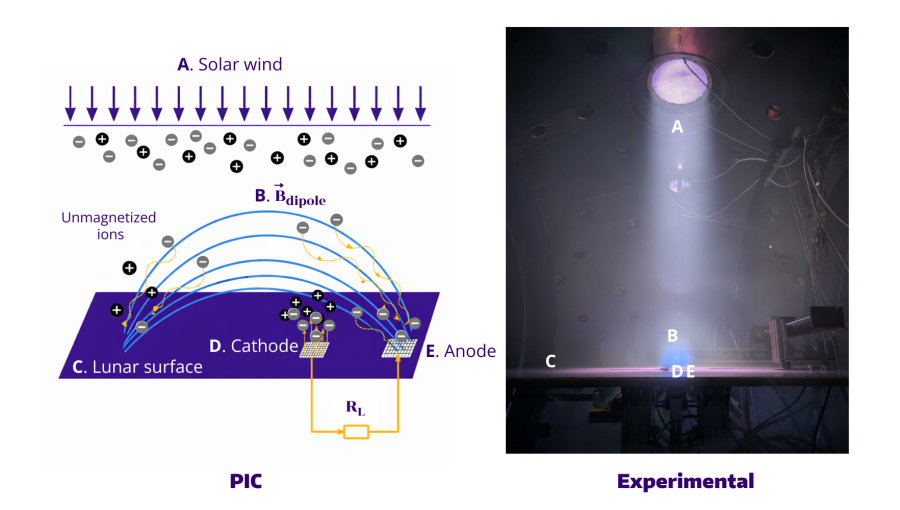
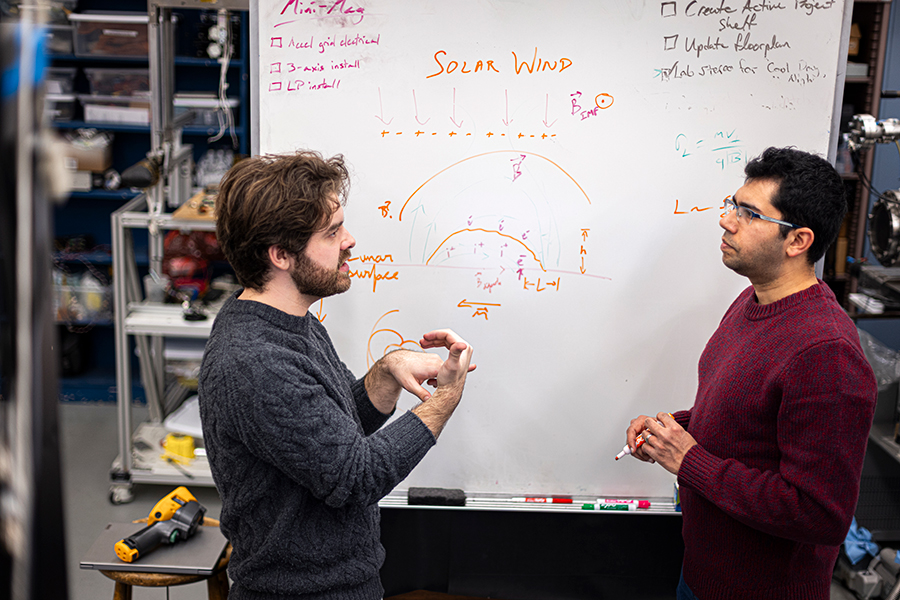
The concept centers on the polarized electric field that forms naturally around these mini-magnetospheres. As the solar wind hits the magnetic anomaly, the lighter electrons are trapped by the magnetic field lines, while the heavier ions penetrate deeper due to their momentum. This separation of positive and negative charges creates a natural voltage difference of 100 to 500 volts.
This separation is the building block of a battery. In a regular battery, separated charges create voltage. Connect a wire between the terminals, and current flows as the charges reunite. The mini-magnetosphere does something similar by naturally separating the positively charged ions from the negatively charged electrons.
"We can basically consider them as a battery," Little explains. “However, there's a catch. While the voltage is high, the solar wind is incredibly low-density with only about five particles per cubic centimeter.”
This means the "battery" has plenty of voltage but lacks the current needed to drive a useful load. To solve this, researchers inject a stream of electrons into the magnetic "bubble" of a mini-magnetosphere. These electrons spread out, creating a massive, invisible cloud that acts like a giant net. This "virtual" electrode covers a much larger area than the physical device, turning what Little calls "a stream into a river" of current that allows for an appreciable power draw.
“This research will allow us to not only advance our understanding of the natural phenomena present at lunar magnetic anomalies, but also how we might leverage these phenomena to support the long-term growth of human operations on the Moon.”
Physical experiments and computational simulations
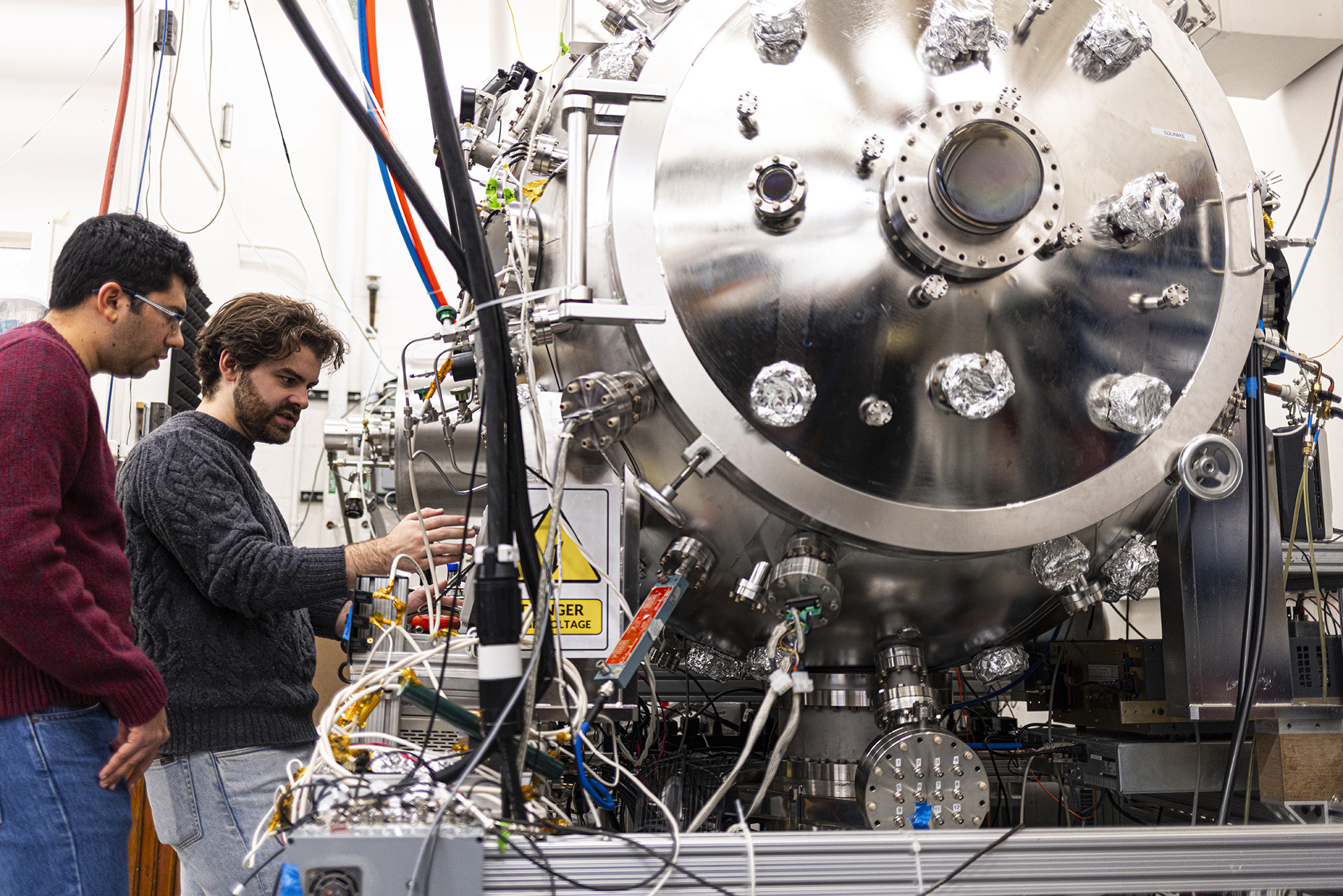
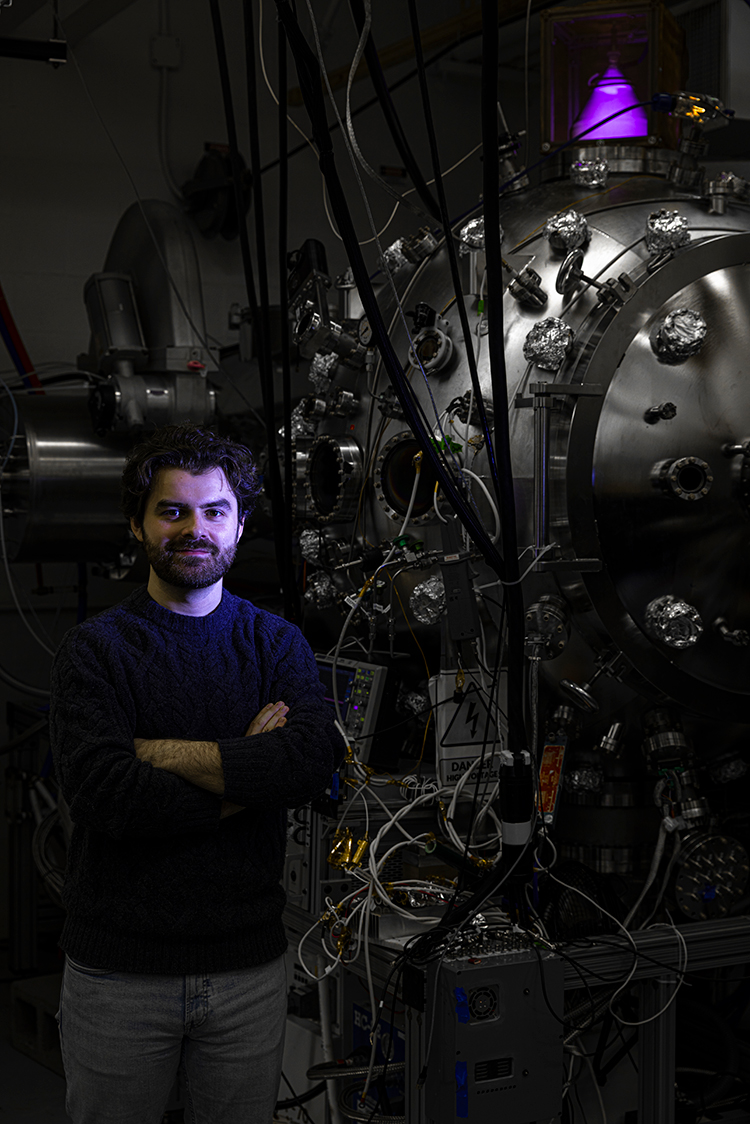
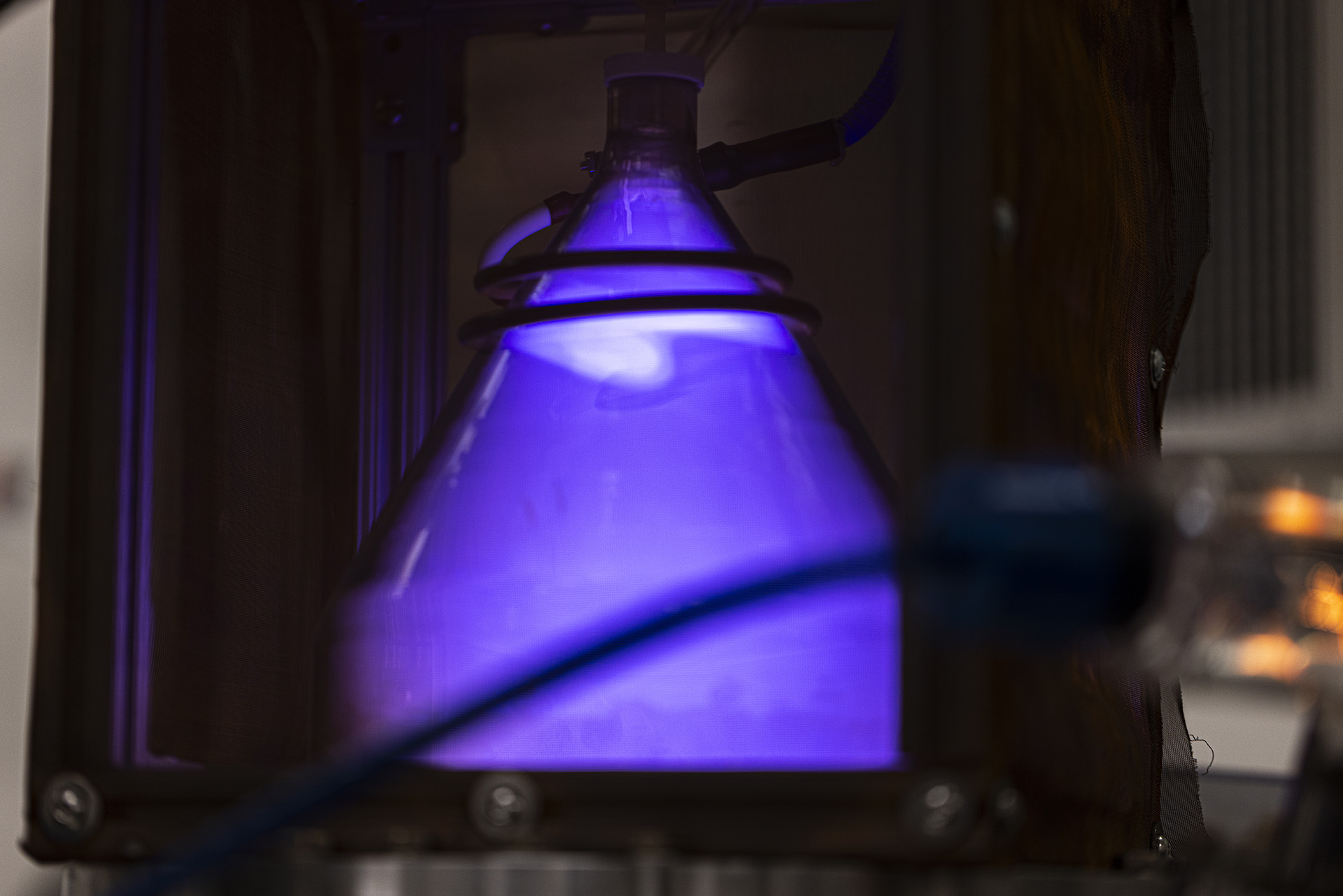
For Ph.D. student Patrick Rae, the first challenge was figuring out how to replicate a 100-kilometer lunar structure into the lab’s Space Test Facility. He designed and built a scaled-down version inside a 1.6-meter vacuum chamber.
At the top of this chamber sits a gridded ion accelerator that fires a supersonic jet of krypton plasma to simulate the solar wind. This plasma beam strikes a simulated lunar surface made of fiberglass with a powerful neodymium magnet embedded inside to mimic the Moon's natural magnetic anomalies. The magnetic field snags the lighter electrons while the heavier krypton ions punch through, successfully shrinking a massive 80-kilometer space structure down to a manageable 8-centimeter bubble that researchers can measure with high-precision probes.
"Being able to jump into a project and get it to turn on for the first time is very satisfying," says Rae, who personally machined many of the delicate components for the testbed.
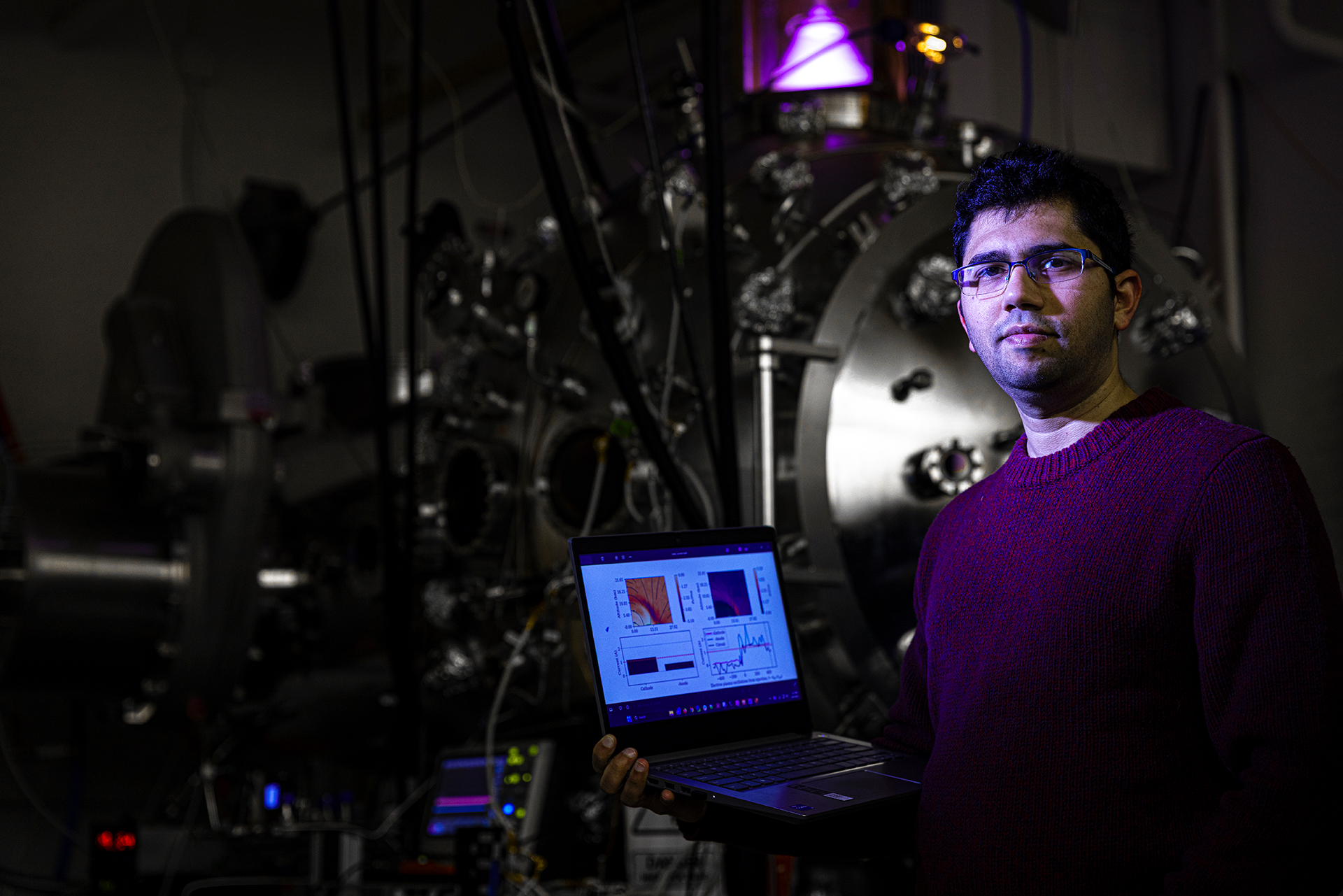
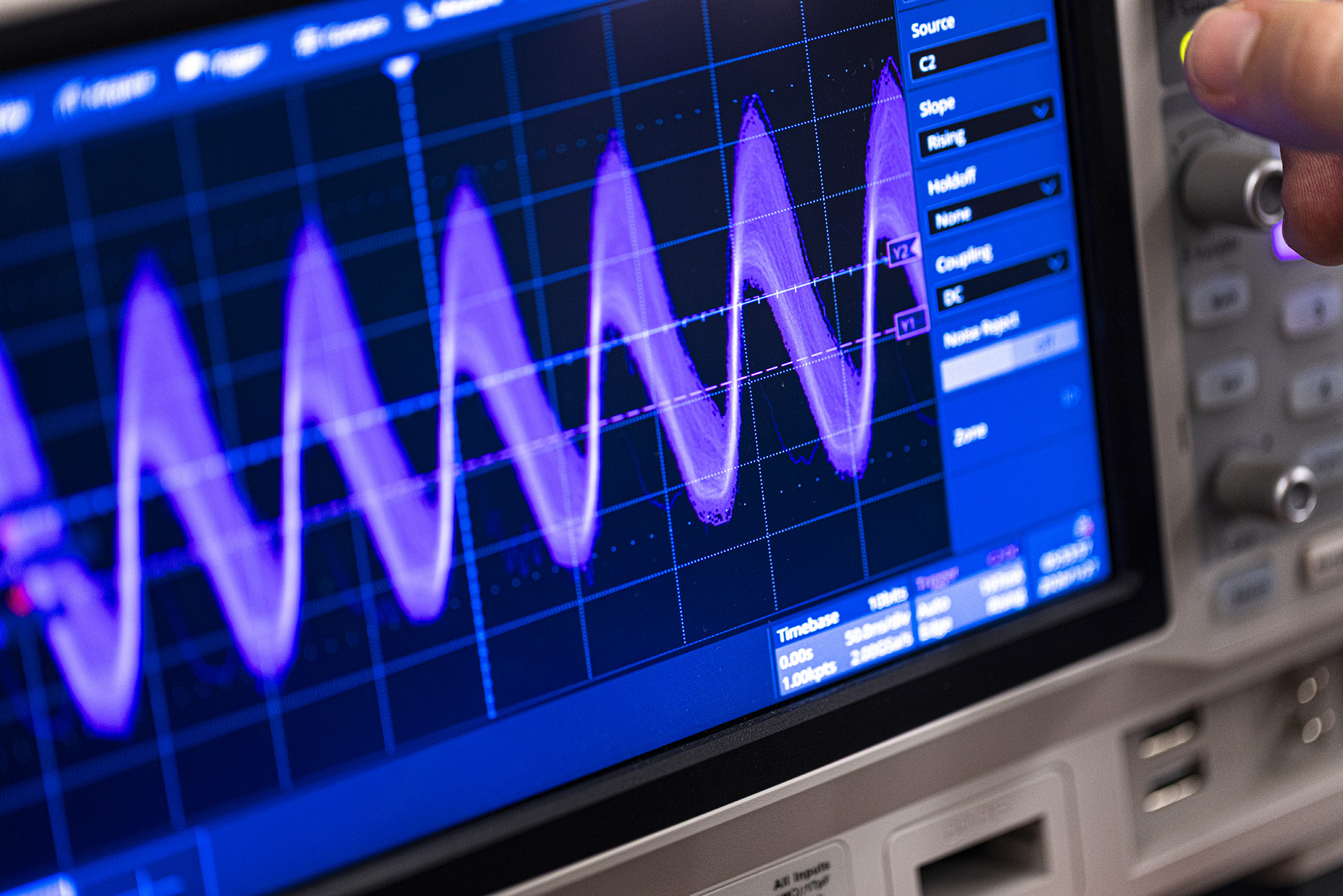
While Rae builds the physical experiment, Ph.D. student Arvindh Sharma explores the digital Moon. Using the UW's Hyak supercomputing cluster, Sharma employs 3D Particle-in-Cell (PIC) modeling to simulate the complex physics that the human eye cannot see.
Traditional fluid models fail here because the plasma is kinetic, moving so quickly that researchers must track individual "super-particles" on microsecond timescales to understand the system's stability. Sharma's simulations are critical for determining if the magnetosphere will remain stable under the strain of power extraction. If too much current is drawn, the polarization field could collapse, resulting in no power.
"Computational models are incredibly powerful if you understand what physics you are feeding in," Sharma notes. His work provides the high-fidelity 3D picture necessary to validate the experimental results.
From plausible to practical
The synergy between Rae's experiments and Sharma's simulations is the project's backbone. The lab experiments have already confirmed that a polarization field forms and that power can be amplified through electron injection, matching Sharma's computational predictions. Net positive power, though, hasn't yet been achieved in the lab due to the power demands of the experimental equipment, but the theoretical models suggest it's entirely possible on the lunar surface.
Ultimately, this work is about more than just electricity. By mastering these mini-magnetospheres, the team is informing the future of lunar human habitation. Whether shielding astronauts from radiation or keeping the lights on in a lunar base, these magnetic anomalies might become part of the infrastructure for space exploration.
"Patrick and Arvindh have done tremendous work taking this concept from an initial idea to a full hardware demo supported by 3D simulations," says Little.
In recognition of their accomplishments, Little was selected for a DARPA Director's Fellowship, a highly-selective award given to the top performing YFA projects, which includes an additional year of funding. Little adds, "We are very excited to be continuing our work on this project. This research will allow us to not only advance our understanding of the natural phenomena present at lunar magnetic anomalies, but also how we might leverage these phenomena to support the long-term growth of human operations on the Moon."